

End-to-end monitoring systems built for third-party review
Be confident in your carbon stock estimates, biomass change forecasts, biodiversity baselines, and restoration metrics. We design pipelines for our clients that are transparent, repeatable, and audit-ready.
Most projects discover the flaws in their monitoring system at exactly the wrong moment.
When a registry tightens its verification standards, a methodology body demands reproducibility, or an independent reviewer arrives, gaps that were invisible internally become liabilities fast — and discovering them late is almost always more expensive than designing them out from the start.
Reproducibility. If the analyst who built your monitoring system left tomorrow, could someone else reproduce every output from scratch? Many systems are held together by institutional memory, undocumented assumptions, and processes only one person fully understands.
Consistency over time. A baseline established at project inception and a biomass estimate produced five years later need to be directly comparable. Without a system designed for consistency from the start, survey-to-survey variation can get mistaken for real forest change that reviewers will notice.
Methodological defensibility. Registries, methodology bodies, and independent reviewers don't only check outputs, they interrogate the method behind them. A monitoring system that can't produce a clear, documented answer to "why did you do it this way" is a liability, not an asset.
How we can help:
Effective monitoring requires more than good data — it requires a system designed from the start to be transparent, challenged, and independently reproduced.
2. System build and integration


4. Third-party readiness
3. Output production


We design the full monitoring pipeline — data inputs, processing steps, outputs — and document every step so the system is reproducible by your team, an auditor, or a third party.
1. Scoping and baseline design
We work with your team to define the monitoring scope, select appropriate methodologies, and establish baselines that meet the evidentiary bar set by your target registry or methodology body.
We stress-test outputs against the standards of independent review before submission — so weaknesses are found and resolved by us, not flagged by a reviewer.
We deliver audit-grade outputs: carbon stock estimates, biomass change tracking, biodiversity baselines, and restoration progress metrics — each traceable back to their inputs and methods.
Systems we’ve built
Case Study
Biomass forecasting for next-generation carbon credits
We designed and built the AI-driven biomass forecasting system underpinning EquitableEarth's M002 REDD+ methodology — producing pixel-level risk maps that predict annual biomass loss across continental-scale jurisdictions.
The system was built for auditability from day one and underwent independent review by Space Intelligence. It is now the production infrastructure that determines how carbon credits are issued under M002.
Faya Foundation

BaKIM / Smart City Bamberg
Case Study
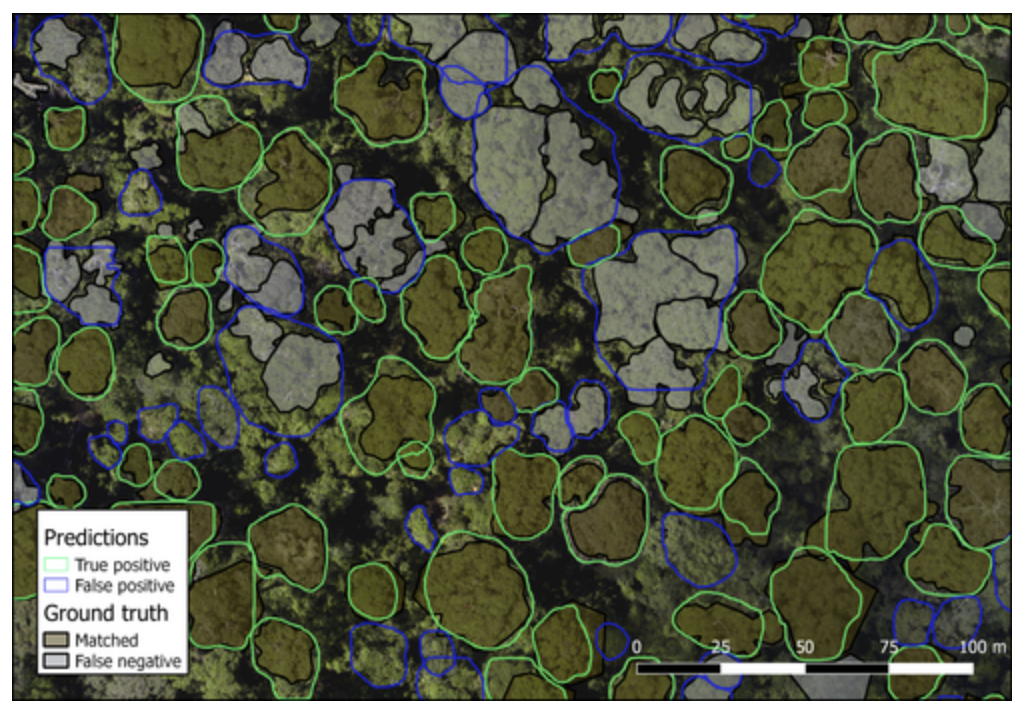
Taking a tree-monitoring AI from research to operational rollout
We were brought in as the AI and computer-vision experts to move a research-grade municipal tree monitoring system into production — optimising the detection pipeline, extending its capabilities, and integrating it into a deployable web application that city staff can run operationally.
The system entered practical use in mid-2026 and is now expanding to additional German municipalities.
“It's been a pleasure working with such a knowledgeable and efficient team of computer vision experts. I couldn't recommend forestmap.ai more highly.”
— Jeremy Freund, CTO, Wildlife Works
Pair monitoring with the data that powers it
Robust monitoring starts with knowing exactly what's standing.
[Explore Precision Inventory →] to see how we provide tree-level, species-level data that underpins credible carbon and biodiversity baselines.
[Explore Risk Intelligence →] to layer forward-looking deforestation risk on top of your monitoring system.
Let’s discuss your forest.
Reach out to find out more about how forestmap.ai can help your organization.
info@forestmap.ai
+44 (0)7986 882 740
By submitting this form, you acknowledge our Privacy Policy.
